Agentic AI Based Social Engineering
Threat Intelligence-Based Awareness Training Your employees train against templates. Attackers train against your organization.

Threat Intelligence-Based Awareness Training
Your employees train against templates. Attackers train against your organization.
By Jason Thatcher | Founder & CEO, Breacher.ai
2026 Will Be Hard Mode: Why Agentic AI Is the Biggest Social Engineering Threat You Won't See Coming
Last Year, U.S. businesses lost $16.6 billion to cybercrime, a 33% increase from the previous year. Phishing, spoofing, and business email compromise dominated the FBI's complaint categories. The same threats we've been fighting for years.
On the surface, 2026 won't look much different. The threat landscape will feel familiar: phishing, vishing, deepfakes. The same attack vectors security teams have been defending against for a decade.
But that familiarity is a trap.
There's a fundamental shift happening underneath, and it's harder to discern. It's not a new attack type. It's not a novel vulnerability. It's something far more disruptive: Agentic AI has become the operator, not just the tool.
This is the biggest threat heading into the new year, and most organizations aren't prepared for it. Many don't fully realize what's already happening.
The Numbers Don't Lie, But They Don't Tell the Whole Story
The data is staggering. Voice phishing attacks surged 442% in the second half of 2024, according to CrowdStrike. Deepfake incidents in Q1 2025 alone exceeded the entire previous year by 19%. AI-generated phishing emails now achieve a 54% click-through rate, compared to just 12% for traditional phishing.
But here's what should keep every CISO up at night: Palo Alto Networks' Unit 42 research team simulated a complete ransomware attack, from initial compromise to data exfiltration, in just 25 minutes using AI at every stage. That's a 100x increase in speed compared to traditional attack methods.
The median time to exfiltrate data after initial access dropped from nine days in 2021 to two days in 2024. In nearly one in five cases, exfiltration happened within the first hour.
These aren't projections. This is the current reality. And it's about to accelerate.
The Shift: From Tool to Operator
For decades, social engineering has required a human operator. Someone had to research the target, craft the pretext, stage the attack, execute it, and scale across an organization. Even with automation tools, a skilled human was always at the center, making decisions, adapting in real-time, orchestrating the campaign.
Agentic AI changes that equation entirely.
We're no longer talking about AI that helps attackers write better phishing emails or clone voices. We're talking about autonomous AI agents that can research targets, build psychological profiles, generate contextually perfect pretexts across multiple channels, adapt based on responses, and orchestrate multi-stage campaigns, all without meaningful human intervention.
As Unit 42 describes it, these systems "independently execute multistep operations" by chaining together specialized sub-agents for reconnaissance, exploitation, and exfiltration. The result is a dramatic compression of the cyber kill chain.
The human operator isn't augmented. They're largely removed from the loop.
How Do We Know This? Because We're Doing It Today.
This isn't theoretical. At Breacher.ai, we conduct AI-powered social engineering assessments for Fortune 500 companies. We've built offensive capabilities that leverage agentic AI to test human defenses at scale.
What used to take a red team days or weeks (reconnaissance, pretext development, multi-channel coordination) can now be compressed into minutes. The AI researches targets across LinkedIn, social media, corporate filings, and earnings calls. It identifies communication patterns and psychological leverage points. It generates personalized attacks that are indistinguishable from a skilled human operator.
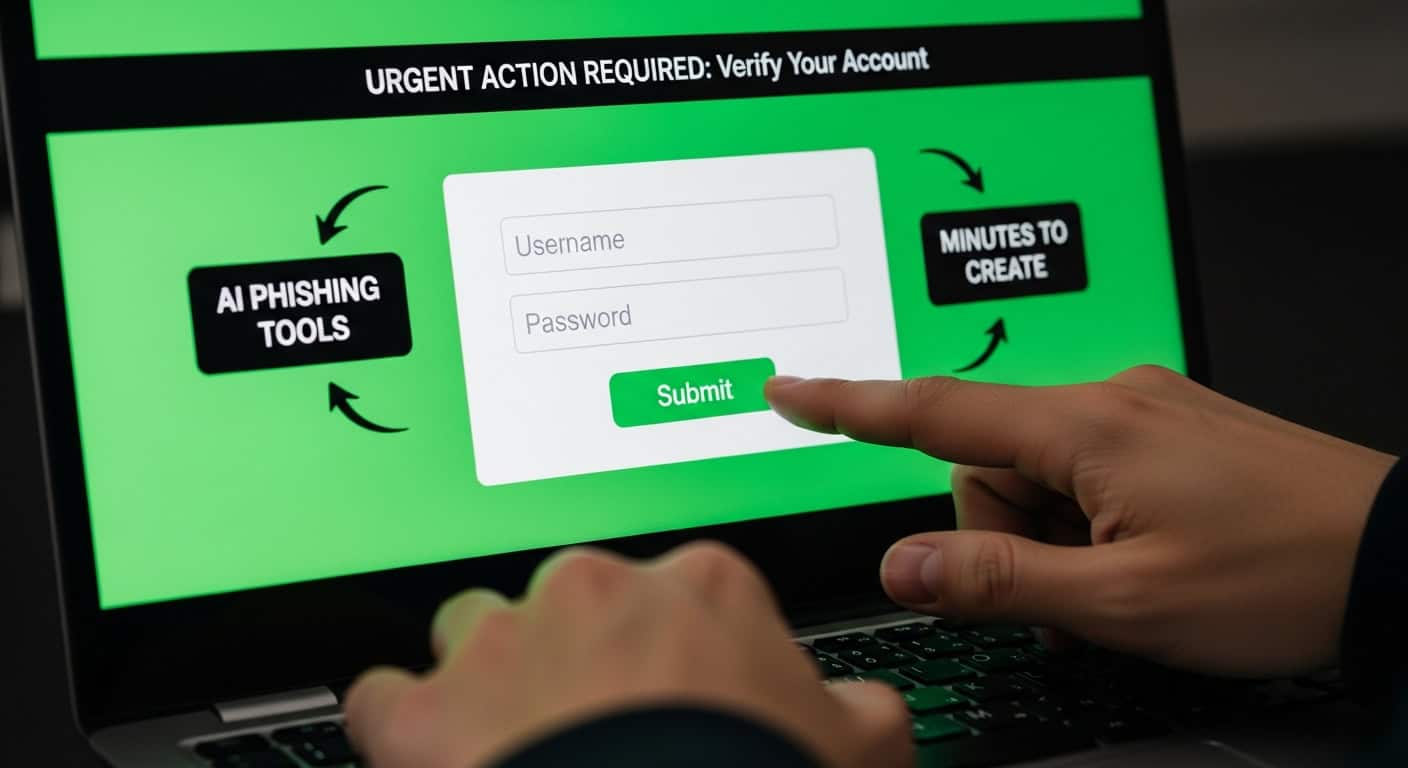
It spins up webpages, phishing lures and has the ability to personalize each phishing campaign. Spear-Phishing on a next level... More advanced, Faster, and Adaptive. Our AI can respond to texts, phone calls and emails and adapt based on user responses. We have the ability to pair this with a Deepfake as well.
And it does this at scale.
We're not alone in this capability. Groups like Muddled Libra (also known as Scattered Spider) have already been observed using AI-generated audio and video to impersonate employees during help desk scams. North Korean threat actors are using real-time deepfake technology to infiltrate organizations through remote work positions. Attackers are leveraging generative AI to conduct ransomware negotiations, breaking language barriers and negotiating higher payments.
If we can do it for defensive purposes, adversaries are already doing it for offensive ones. The capability gap has collapsed.
What This Means for 2026
Those mass phishing blasts everyone's been trained to spot? They're becoming hyper-targeted. Spear-phishing at mass scale. Every email is personalized. Every pretext was researched. Every attack vector is coordinated across email, voice, SMS, and collaboration platforms.
Multi-stage. Adaptive. Relentless.
The economics of social engineering have fundamentally changed. Previously, sophisticated attacks required sophisticated operators: expensive, scarce, and limited in how many campaigns they could run simultaneously. Agentic AI removes those constraints. A single threat actor can now orchestrate numerous personalized, coordinated campaigns.
The cost reduction is staggering. Research shows AI-automated phishing can cut campaign costs by approximately 95% compared to traditional methods, while generating attacks up to 40% faster.
And here's what makes this truly dangerous: these agents don't get tired. They don't make inconsistent mistakes. They don't take weekends off. They learn from every interaction and optimize continuously.
The Real Threat of 2026
Most security awareness programs were designed for a different threat model, one where attackers were human, attacks were generic, and the tell tale signs were obvious. Broken English. Suspicious links. Requests that didn't match normal business processes.
That playbook is largely obsolete.
When AI can generate perfect prose, mimic communication styles, reference real business context, and coordinate attacks across channels in real-time, the traditional indicators of compromise disappear. Your employees aren't being trained to defend against what's coming.
Consider this: 82.6% of phishing emails are now devised using some form of AI, a 53.5% increase from the previous year. Studies show three in five people are fooled by AI-automated phishing, matching the success rate of skilled human attackers. But AI operates at a scale no human team can match.
The threat landscape hasn't just evolved. It's undergone a phase transition.
It's no longer humans versus humans. It's humans versus AI.
What Organizations Should Do Now
The organizations that will be resilient in 2026 are the ones taking action now:
Test Against AI-Powered Attacks
If your red team assessments still rely on traditional social engineering methodologies, you're testing against yesterday's threats. You need to understand how your people and processes hold up against agentic AI adversaries, not checkbox compliance exercises.
Rethink Awareness Training
Generic phishing simulations with obvious red flags don't prepare employees for AI-generated, contextually perfect attacks. Training needs to evolve to address sophisticated, personalized threats that don't trigger traditional warning signs.
Layer Your Defenses
When social engineering attacks become indistinguishable from legitimate communications, you need technical controls, process controls, and human verification steps working together. No single layer will be sufficient. Out-of-band verification for sensitive transactions isn't optional anymore.
Compress Your Response Timelines
If attackers can exfiltrate data in under an hour, your detection and response capabilities need to operate at machine speed. Manual triage across dozens of tools won't cut it.
Assume the Perimeter Is the Person
Layer 7, the human layer, is the new perimeter. Your security strategy needs to reflect that reality. Every employee with access to sensitive systems or data is a potential attack surface.
The Bottom Line
2026 will look familiar on the surface. The same threat categories. The same attack vectors. The same security awareness posters on break room walls.
But underneath, everything has changed.
The question isn't whether agentic AI will transform social engineering. It already has. The question is whether your organization will adapt before you become a case study in what happens when you don't.
2026 will be hard mode. Are you ready?
References
- FBI Internet Crime Complaint Center. 2024 Internet Crime Report. Federal Bureau of Investigation, April 2025.
- Palo Alto Networks Unit 42. 2025 Global Incident Response Report. Palo Alto Networks, 2025.
- Palo Alto Networks Unit 42. "Unit 42 Develops Agentic AI Attack Framework." Palo Alto Networks Blog, May 2025.
- CrowdStrike. 2025 Global Threat Report. CrowdStrike, 2025.
- Programs.com. "The Latest AI Cyber Attack Statistics." November 2025.
- The Network Installers. "AI Cyber Threat Statistics: The 2025 Landscape." December 2025.
- Grand View Research. Agentic AI in Cybersecurity Market Size Report. 2025.
Ready to Test Your Defenses?
See how your organization holds up against AI-powered social engineering before attackers find the gaps first.
Schedule Assessment Briefing
Latest Posts


Table Of Contents
About the Author: Jason Thatcher


 support@breacher.ai