Black Basta Ransomware Analysis | Breacher.ai

Your Help Desk Just Called.
It Wasn't Your Help Desk.
How Black Basta turned Microsoft Teams into a ransomware delivery platform — and why Breacher.ai is the only platform that can simulate this attack against your workforce today.
The Attack Nobody Is Training For
There's a message in your Microsoft Teams right now. It says it's from IT Support. They're offering to help with the spam flood that's been hitting your inbox all morning. They seem legitimate. They know your name. They know your company. They're patient, professional, and persistent.
They are not your IT department.
They are Black Basta — or what remains of one of the most prolific ransomware operations in recent history — and they've engineered one of the most psychologically sophisticated initial access techniques ever documented against enterprise environments. And almost no security awareness platform is training employees to recognize it.
This is not a phishing email. There's no suspicious link, no obvious spoofed sender. It's a live, human-driven social engineering conversation — conducted inside a platform your employees trust every day.
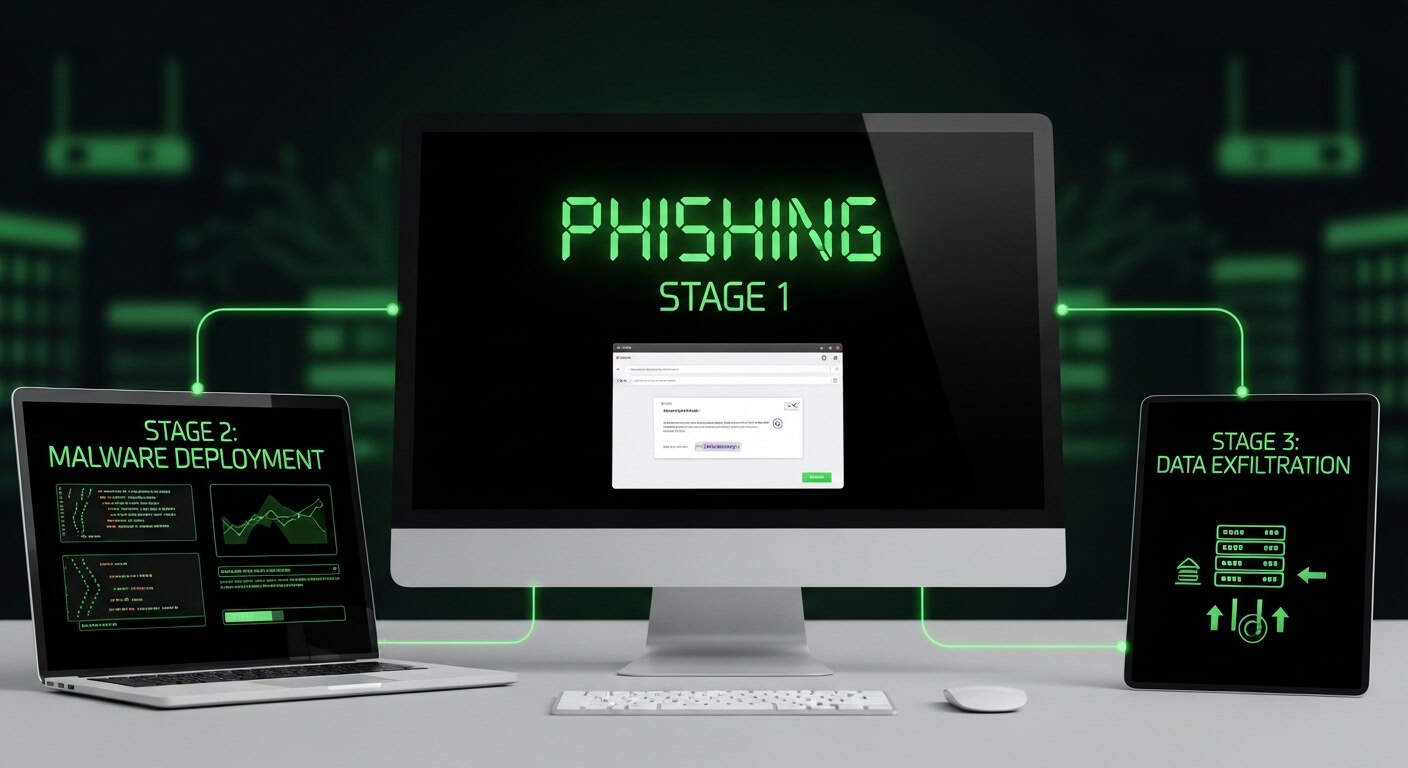
The Black Basta Attack Chain: Step by Step
Black Basta's playbook didn't evolve by accident. It evolved because traditional defenses stopped working. Here's exactly how the attack unfolds.
Stage 1: The Email Bomb
The attack begins with deliberate chaos. Threat actors flood a target's inbox with hundreds of benign newsletter subscriptions and sign-up confirmations — in documented incidents, a single user received as many as 326 emails in a short window. This isn't random noise. It's engineered to create a problem your employee desperately needs someone to solve.
Stage 2: The Teams Impersonation
Within minutes of the email flood, the target receives a one-on-one Microsoft Teams chat from what appears to be their IT Help Desk. The threat actor has set up a Microsoft 365 tenant with display names like "Help Desk," "Help Desk IT," or "IT Support" — designed to appear as an internal resource. The message is warm, professional, and perfectly timed: "Hi, I see you're experiencing an issue with your inbox. I'm from IT support and I'm here to help."
Half of these Teams phishing messages originate from onmicrosoft.com subdomains. Another 42% come from compromised legitimate business domains — making them nearly indistinguishable from authentic organizational traffic.
Stage 3: The Remote Access Trap
Once trust is established through conversation, the attacker asks the employee to open Quick Assist or AnyDesk for "remote troubleshooting." To further legitimize the request, some campaigns distribute malicious QR codes framed as IT troubleshooting files. The employee — overwhelmed, grateful for the help, and already conditioned to trust the interaction — complies.
Stage 4: Full Network Compromise
With remote access granted, the attacker moves fast. Malicious batch files and ZIP payloads are downloaded via BITSAdmin. EvilProxy — an adversary-in-the-middle phishing kit — captures credentials and hijacks session tokens to defeat MFA. SystemBC is deployed to establish command-and-control. Finally, Black Basta ransomware is pushed across the entire network via PsExec.
Despite Black Basta's brand effectively disbanding in early 2025, former affiliates have migrated to CACTUS and BlackSuit — and brought the exact same playbook with them. The TTPs are alive, active, and expanding across the ransomware-as-a-service ecosystem.
Stage 5: Python Payloads and Cloud Abuse
The most recent evolution adds Python script execution to the chain — using cURL requests to fetch and deploy malicious payloads silently. Updated variants of a Java-based RAT now abuse Google and Microsoft cloud infrastructure to proxy commands, using legitimate cloud service provider servers as cover. Your EDR doesn't flag traffic to OneDrive or Google Drive. That's the point.
Why Your Current Training Fails Against This
Ask yourself honestly: does your security awareness training simulate a Microsoft Teams chat from a convincing external "IT Support" persona? Does it replicate the psychological pressure of a flooded inbox followed immediately by an authoritative help desk outreach? Does it test whether your employees know to verify identity before granting remote access to an unsolicited caller?
For the overwhelming majority of organizations, the answer is no.
The Black Basta attack doesn't arrive in an email. It arrives as a conversation — trusted, timely, and psychologically engineered to exploit the exact moment your employee is most distracted and most willing to accept help. No click-the-link simulation prepares anyone for that.
The Only Platform Built to Simulate This
Breacher.ai was purpose-built for exactly this threat landscape. Our OSES™ Platform — Orchestrated Social Engineering Simulations™ — is the only commercial red team platform that can replicate the full Black Basta attack chain as a sanctioned simulation against your workforce.
What We Simulate That No One Else Can
- Microsoft Teams IT Support Impersonation We simulate external Help Desk personas reaching out via Teams with realistic pretexts, organizational context pulled from OSINT, and perfectly timed follow-through — exactly how Black Basta does it.
- Email Bombing + Follow-On Social Engineering We replicate the trigger event. Your employees receive the overwhelm first, then the "help." The psychological sequence is what makes this attack work. We test the full chain, not individual components.
- AI-Powered Vishing with Deepfake Voice Cloning Our ElevenLabs-integrated voice agents deliver hyper-realistic IT support personas over the phone — live, adaptive conversations with voices engineered to match your organizational culture.
- Multi-Vector Campaign Orchestration Email, Teams, voice, and SMS — coordinated in sequence, timed to create the exact cognitive load Black Basta exploits. We don't test channels in isolation. We test the kill chain.
- Fortune 500-Validated Results We've executed these exact simulations against large enterprise environments, including a sanctioned engagement producing measurable behavioral change at scale.
Breacher.ai simulations put your employees face-to-face with the exact techniques threat actors use — before real attackers do. Recognition only comes from experience, and experience only comes from realistic simulation.
What You Should Do Right Now
The technical controls matter, but they're the floor — not the ceiling. Start here:
Lock Down External Teams Access
Disable communication from external Microsoft Teams users by default. When external communication is necessary, allowlist specific trusted domains only. This eliminates the primary delivery channel Black Basta relies on to initiate contact.
Enable Teams Audit Logging
Turn on the ChatCreated event in Teams audit logs immediately. Accounts impersonating IT help desks typically display names containing "Help Desk" — often surrounded by whitespace characters to center the name visually in chat. Search for "contains," not exact match, when hunting for these indicators.
Establish a Verification Protocol for Remote Access
No legitimate IT department needs to cold-contact an employee via Teams and immediately request remote access. Implement a hard policy: any unsolicited remote access request must be verified by calling the IT help desk directly through a known internal number — not by calling back the number provided by the requestor.
Test Your People — Realistically
Policy controls alone are not enough. Your employees need behavioral muscle memory. The only way to build that is through realistic, multi-channel simulation that replicates exactly what Black Basta does — including the email flooding, the Teams pivot, the voice pressure, and the urgency framing. That is precisely what Breacher.ai delivers.
See How Your Organization Holds Up
Breacher.ai runs fully sanctioned simulations that replicate the exact Black Basta attack chain — email bombing, Teams IT support impersonation, AI-powered vishing, and multi-vector orchestration — before real threat actors find out your answer.
Latest Posts
Table Of Contents
About the Author: Jason Thatcher


 support@breacher.ai