Orchestrated Social Engineering Simulation (OSES)™ | Breacher.ai

Orchestrated Social Engineering
Simulation (OSES)™
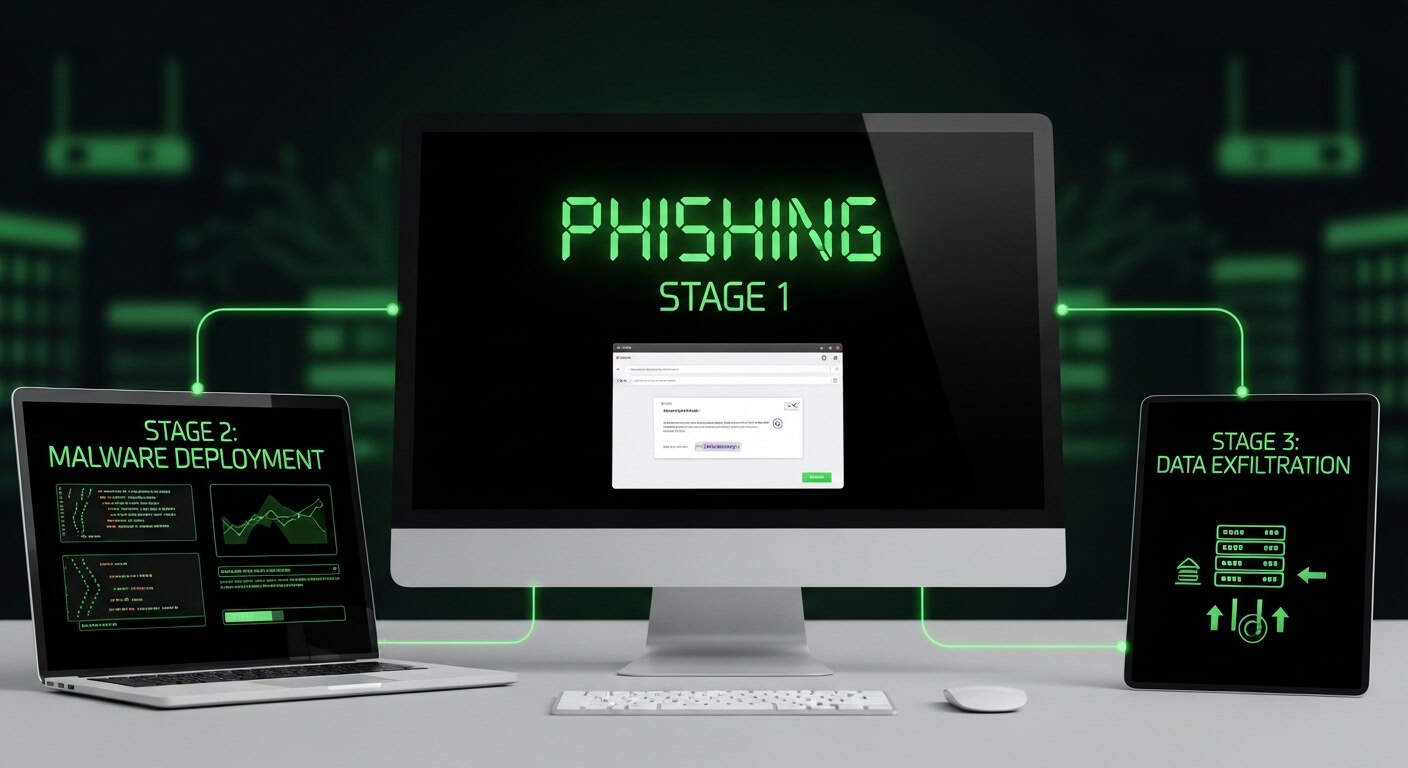
Security platforms test channels in parallel. Real attackers chain them together — each stage building on the last, each message referencing what came before. OSES™ is the only simulation methodology that replicates how modern adversaries actually operate.
Every Stage Builds on the Last
OSES™ is a simulation methodology in which attack stages are causally linked — not independently deployed. The voice call references the email. The video call references the voice call. Each stage is only possible because of what the previous stage established. This is how real adversaries operate. It is the only way to test whether your organisation can actually withstand a coordinated campaign.
Orchestrating a multi-stage attack chain requires a campaign intelligence layer that does not exist in any template-based simulation platform. Every stage must share state: the voice call agent must know what the email said, the video call must know what the voice call established, and the entire campaign must adapt in real time based on how the target responds. This is not a configuration problem. It is a platform architecture problem. Breacher.ai was built from the ground up to maintain campaign state across channels, adapt execution based on target behaviour, and chain attack stages the way real adversaries do — with OSINT-informed pretexts, sub-200ms voice cloning, and live interactive deepfake video on Teams, Zoom, and Google Meet. No other platform ships this capability today.
Sequential Dependency
Every attack stage references and builds on what came before. The voice call knows what the email said. The video call knows what the voice call established. A single narrative thread connects every touch point from first contact to harvest.
- Stage 2 is impossible without Stage 1
- Pretext evolves with target engagement
- Trust built methodically before every ask
- Mirrors documented adversary TTPs exactly
OSINT-Informed Personalisation
The pretext in Stage 1 is drawn from real, publicly available intelligence about the target's actual role, relationships, and current projects. Nothing generic. Everything specific. The campaign feels expected because it was built from real information.
- LinkedIn, org charts, earnings calls analysed
- Target profile built before first contact
- Pretext references real names and projects
- Each campaign unique to the target organisation
Adaptive Execution
The campaign branches based on target response at each stage. If the target ignores Stage 2, Stage 3 escalates with higher urgency. If the target engages, Stage 3 references that engagement as confirmation. Real attacker logic — not static playbook delivery.
- Real-time response to every target action
- Campaign logic adapts at each decision point
- Branching paths mirror real adversary adaptation
- Requires platform-level campaign intelligence layer
Three Ways Siloed Testing Fails
These are architectural failures — they cannot be fixed by adding more templates or more channels. They require a fundamentally different approach.
No Causal Link Between Stages
Channels are deployed in parallel. Each attack vector is independent — the email doesn't know about the voice call, the voice call doesn't reference the email. No shared pretext. No narrative thread.
- Stage 2 cannot reference Stage 1 output
- No campaign intelligence layer exists
- Each test is a cold start from scratch
- Misses the seams where attacks succeed
False Confidence from Pass Rates
An employee who passes all three isolated tests — email, voice, and video — will still fail a coordinated attack. The trust built in Stage 1 disarms their skepticism in Stage 3. Siloed pass rates hide this entirely.
- Stage-awareness gap goes completely undetected
- Click rates measure the wrong thing
- Green dashboards, real vulnerability
- Boards see compliance, not resilience
Static Templates, Not Adaptive Campaigns
Real attackers adapt. If the target ignores the email, the call escalates with a different pretext. If they clicked, the call references it. Static templates deliver the same message regardless of target response. That is not how attacks work.
- Templates don't respond to behaviour
- No branching logic based on target actions
- Same pretext for every target in the cohort
- Attackers adapt in real time — simulations should too
Siloed Testing vs. OSES™
Two fundamentally different architectures. One tests how employees respond to isolated stimuli. The other tests how they withstand a coordinated adversarial campaign.
After Their First OSES™ Engagement
I think the entire company is already talking about voice cloning and the risks. It's been a huge win for us already, without even seeing any of the actual results.
I was expecting a demo, not an episode of Black Mirror. This is really good. I'm surprised at how advanced it's gotten.
Users were surprised with how good the deepfakes were. I'm really impressed. Really crazy talking to a deepfake. The chain hit differently than anything we'd tested before.
The OSES™ Glossary
These are the terms that define the category. Use them with your security teams, your boards, and your auditors.
See an Orchestrated Attack Chain Live
We'll run a sanctioned OSES™ simulation against your own executives — calendar phishing, voice clone, and live deepfake video on Teams — as a single coordinated campaign. Most organisations are surprised by the results.
Latest Posts


Table Of Contents
About the Author: Jason Thatcher


 support@breacher.ai