Synthetic Identity Phishing

Synthetic Identity Phishing:
A Top Threat of 2026
AI-generated personas, cloned voices, and deepfake video calls are enabling a new wave of hyper-personalized attacks that traditional security doesn't address.
The Evolution of Social Engineering
The cybersecurity landscape has fundamentally shifted. While organizations spent decades building defenses against malware, ransomware, and network intrusions, threat actors have discovered a far more effective attack vector: the human element. And in 2026, they're weaponizing artificial intelligence to exploit it at unprecedented scale.
Synthetic identity phishing represents the convergence of multiple AI technologies—generative text, voice cloning, and deepfake video—into a single, devastating attack methodology. Unlike traditional phishing, which relies on generic templates and obvious tells, synthetic identity attacks create entirely fabricated personas that are virtually indistinguishable from real people.
What Makes Synthetic Identity Phishing Different
Traditional phishing attacks are essentially a numbers game—blast thousands of emails and hope a small percentage click. Synthetic identity phishing inverts this model entirely. These are surgical, high-value strikes that leverage AI to create hyper-personalized attack scenarios.
- AI-Generated Personas Complete synthetic identities with LinkedIn profiles, company email signatures, and realistic communication patterns that pass basic verification.
- Voice Cloning Attacks Real-time voice synthesis that can impersonate executives, vendors, or colleagues using just minutes of audio scraped from public sources.
- Deepfake Video Calls Live video manipulation enabling attackers to conduct face-to-face meetings as anyone they choose to impersonate.
- Context-Aware Messaging AI systems that scrape LinkedIn, corporate announcements, and social media to craft messages referencing real projects, timelines, and relationships.
The danger isn't just technical sophistication—it's psychological. Synthetic identity attacks bypass rational skepticism by exploiting trust relationships and social proof that employees have been trained to rely on.
Why 2026 Is the Inflection Point
Several converging factors have made 2026 the year synthetic identity phishing moves from theoretical threat to operational reality:
Democratized AI Tools
Voice cloning that required studio equipment three years ago now takes 30 seconds with free online tools. Deepfake video generation has moved from research labs to consumer applications. The barrier to entry for sophisticated attacks has effectively collapsed.
Remote Work Normalization
The permanent shift to hybrid work has eliminated many in-person verification opportunities. Employees are accustomed to receiving urgent requests via video call from people they've never met face-to-face. This creates a perfect environment for synthetic identity exploitation.
AI-Accelerated Reconnaissance
Large language models can now automate the research phase of social engineering, scraping and synthesizing information about targets, their organizations, and relationships in minutes rather than days. What used to require a skilled social engineer now requires only a prompt.
The question isn't whether your organization will face a synthetic identity attack—it's whether your people will recognize it and respond appropriately when it happens.
Real-World Attack Scenarios
The Vendor Impersonation
Attackers create a synthetic identity posing as a representative from a known vendor. Using voice cloning of actual vendor contacts and AI-generated context about ongoing projects, they request changes to payment information or access credentials. The attack leverages existing trust relationships and business urgency.
The Executive Deepfake
A deepfake video call from the "CFO" to a finance team member, requesting an urgent wire transfer for a confidential acquisition. The video quality is good enough to pass casual inspection, and the request fits a pattern of legitimate executive behavior.
The Synthetic Job Applicant
An entirely fabricated candidate—complete with LinkedIn profile, polished resume, and AI-generated interview responses—applies for positions with access to sensitive systems. Once hired, the synthetic identity has legitimate credentials and insider access, bypassing traditional security controls entirely.
Why Traditional Defenses Fail
Organizations have invested heavily in security awareness training, email filtering, and identity verification procedures. Against synthetic identity phishing, these defenses have significant blind spots:
Security Awareness Training teaches employees to spot obvious red flags—suspicious links, grammar errors, unusual sender addresses. Synthetic attacks have none of these tells. The emails are well-written, the sender appears legitimate, and the requests align with normal business operations.
Email Security solutions focus on technical indicators—malicious payloads, known bad domains, spoofed headers. Synthetic identity attacks often use legitimate infrastructure and contain no malicious content, just persuasive requests.
Identity Verification procedures typically rely on callbacks or video confirmation. When the attacker controls a cloned voice or deepfake video, these verifications become theater rather than security.
Building Effective Defenses
Defending against synthetic identity phishing requires a fundamental shift from pattern recognition to threat awareness. Organizations need to:
Assume Compromise of Identity Signals
Any communication—email, voice, video—should be treated as potentially synthetic. Verification must move beyond "does this look/sound like the person" to multi-factor authentication of requests themselves.
Implement Out-of-Band Verification
Sensitive requests should require verification through a channel the attacker cannot control. If the request came via video call, verify via a separate phone call to a known number. If it came via email, verify in person or through an authenticated corporate system.
Test with Realistic Simulations
Traditional phishing simulations—the "click the link" tests—don't prepare employees for synthetic attacks. Organizations need red team assessments that deploy actual voice cloning and deepfake technology against their people to establish real vulnerability baselines.
Create Verification Culture
Employees must feel empowered to verify requests without fear of appearing distrustful or slowing down business operations. This requires explicit executive support and demonstrated tolerance for verification friction.
Synthetic identity phishing isn't a future threat—it's a present reality. Organizations that fail to adapt their security posture will find themselves increasingly vulnerable to attacks that their current defenses cannot detect or prevent.
Taking Action
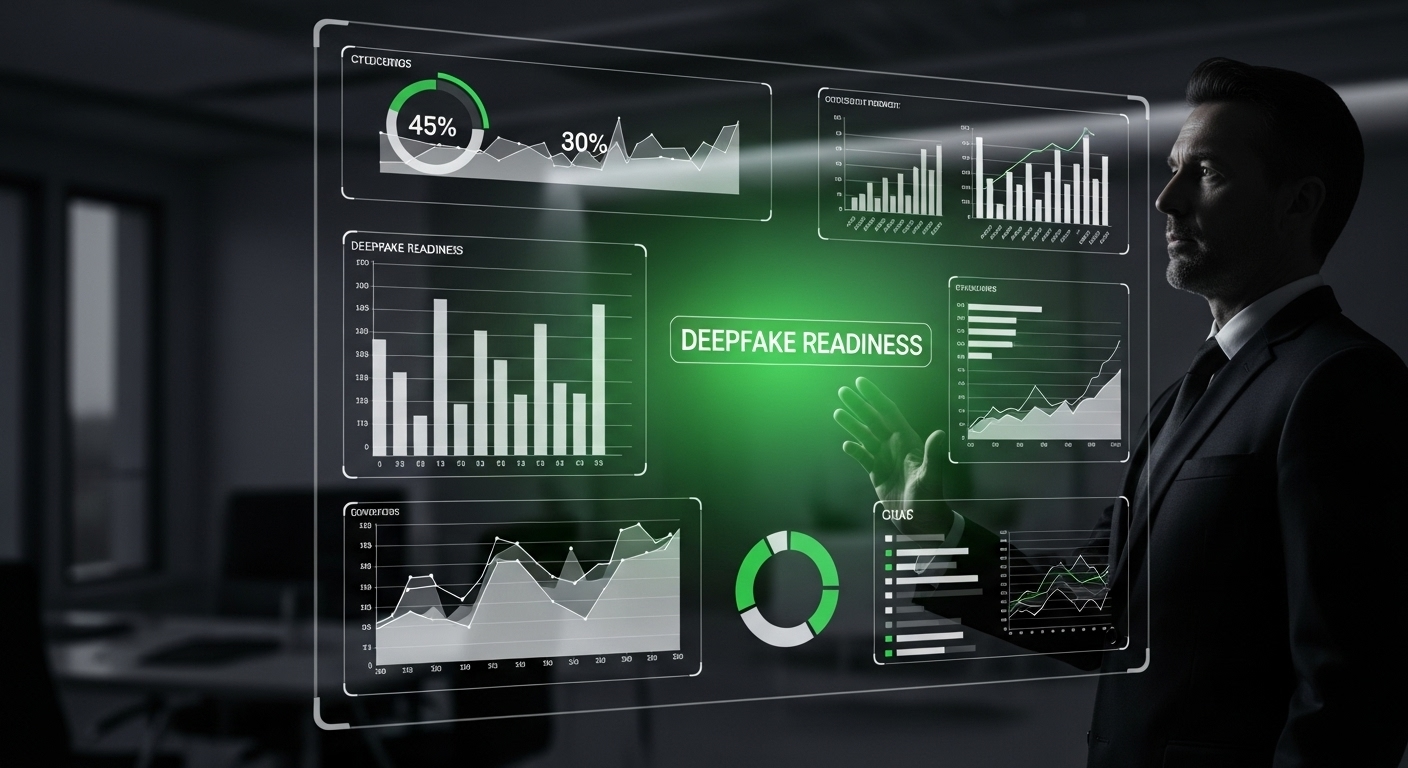
The first step is understanding your actual exposure. Most organizations dramatically underestimate their vulnerability to synthetic attacks because they've never been tested with realistic simulations. Only 8% of organizations we assess show no susceptibility to deepfake social engineering.
We are seeing a significant uptick in organizations reaching out that have experienced a synthetic media attack. Voice clones specifically.
Don't wait for a successful attack to reveal your vulnerabilities. The cost of a synthetic identity breach—financial, reputational, operational—far exceeds the investment required to identify and address weaknesses proactively.
Discover Your Organization's Vulnerability
Our AI Red Team Assessment reveals exactly how your people respond to synthetic identity attacks—before real threat actors find out.
Latest Posts


Table Of Contents
About the Author: Jason Thatcher


 support@breacher.ai